Maternal–Infant Imaging, AI & Neurodevelopment
Tracing the pathways from maternal health to the developing brain.
We develop AI and quantitative MRI methods to map how maternal health shapes placental function, fetal physiology, brain development, and early neurobehavior.
生生之谓易。
The Nurture Map
One connected developmental story.
- Maternal context Health · metabolism · environment
- Placenta Exchange · function · signaling
- Fetal circulation Flow · hemodynamics · oxygen delivery
- Developing brain Structure · connectivity · growth
- Early neurobehavior Regulation · attention · communication
For families
Participate in our research
Two NIH-funded Nurture Map studies are currently recruiting participants. Together, they examine how health during pregnancy relates to placental function, the maternal microbiome and metabolome, and early neurodevelopment.
Recruiting participants
NICHD · R01HD121683
Maternal Obesity–Placenta–Brain Study
We are following families from pregnancy through infancy to understand how maternal health, placental function, fetal circulation, infant brain development, and early behavior are connected.
Recruiting participants
NIMH · R01MH133313
Maternal Metabolism and Neurodevelopment Study
This study examines how maternal metabolic health, the microbiome and metabolome, and early neurodevelopment may be linked across pregnancy and early life.
Eligibility and study activities differ by project. Contact the study team for current, approved details. Contacting us does not enroll you, and participation is voluntary. Please do not include medical records or sensitive health information in your first email.
Research
Our program is supported by four active NIH awards and has contributed to 32 peer-reviewed publications.
By combining imaging, machine learning, multi-omics, and longitudinal behavioral data, we build measurable phenotypes and identify potentially modifiable pathways for earlier intervention.
AI Methods for Perinatal Imaging Phenotypes
We develop learning methods for fetal, placental, newborn, and infant MRI. Our work addresses motion, changing anatomy, variable contrast, scanner differences, and limited labels to produce interpretable developmental phenotypes.
Self-supervised learning · Domain adaptation · Foundation modelsPlacental and Fetal-Circulatory Pathways
We study how maternal metabolism, inflammation, stress, medications, and environmental context shape placental function, fetal hemodynamics, oxygen delivery, and early brain development.
Placental MRI · Fetal circulation · Multi-omicsFrom Perinatal Phenotypes to Neurobehavioral Risk
We connect perinatal imaging phenotypes with regulation, attention, social communication, NICU course, and early psychopathology risk, with an emphasis on modifiable pathways and early prevention.
Longitudinal outcomes · Early behavior · PreventionFeatured program · NICHD R01HD121683
Following the maternal health–placenta–brain pathway from pregnancy to infancy
How do conditions during pregnancy shape placental function and early brain development? This longitudinal program uses multimodal MRI and interpretable computational methods to study connected changes from gestation through infancy.
- Question
- Where along this connected pathway does risk emerge?
- Approach
- Longitudinal imaging, biological measures, and early behavior.
- Why it matters
- To identify measurable and potentially modifiable pathways.
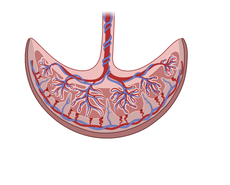
Placental function
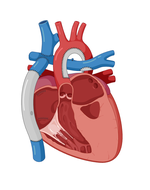
Fetal circulation
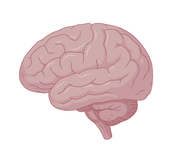
Developing brain
Active support
Current federally funded research programs.
NICHD
R01HD121683
The Maternal Obesity–Placenta–Brain Axis: Longitudinal MRI from Gestation to Infancy
NIMH
R01MH133313
Prenatal Maternal Obesity and Neurodevelopment: The Mediating Role of the Microbiome and Metabolome
NICHD
R00HD103912
Leveraging Artificial Intelligence to Develop Novel Tools for Studying Infant Brain Development
NIH
U54HD122209
ARISEN: Autoimmunity, Rasmussen’s, Inflammation & Status Epilepticus Research Network
Research trajectory
Where we’re going
Our next phase connects measurement, mechanism, and prevention across the maternal–placental–fetal–brain pathway.
-
Measure
Develop quantitative MRI and AI biomarkers of placental, fetal-circulatory, and developing-brain physiology.
-
Explain
Connect maternal metabolic and environmental factors to placental function, fetal physiology, and neurodevelopment.
-
Predict & Prevent
Identify early, modifiable pathways that can guide risk stratification and intervention before neurodevelopmental differences become established.
Methods and software
Our methods account for motion, rapid anatomical change, sparse labels, and heterogeneous scanners in fetal, placental, newborn, and infant MRI.
- AI methodology
- Self-supervised learning · Foundation models · Domain adaptation · Generative modeling
- Imaging methodology
- Motion-robust reconstruction · Quantitative MRI · Segmentation · Multimodal phenotyping
Federated infant neuroimaging platform · 2022
FINNEAS
Privacy-preserving, cloud-based analysis that makes advanced
infant MRI methods accessible without requiring programming
expertise.
Medical image segmentation · CVPR 2024
MAPSeg
Unified domain adaptation for heterogeneous 3D medical images
using masked autoencoding and pseudo-labeling.
Language-guided segmentation · MIDL 2026
NeuroLangSeg
Subcortical segmentation with pseudo-supervision and
anatomical–linguistic validation.
Diffusion reconstruction · MIDL 2026
Fetal MRI Super-Resolution
Orientation-aware diffusion models that recover 3T-like detail
from routine 1.5T fetal MRI.
View two more methods
Quantitative placental MRI · MICCAI 2025
Placental MRI Phenotyping
Contrast-invariant self-supervised segmentation for
reproducible measurement across imaging conditions.
Longitudinal MRI synthesis · IEEE TMI 2022
PTNet3D
A 3D transformer-based framework for high-resolution
longitudinal infant brain MRI synthesis.
Selected publications
Recent and representative work across medical imaging, machine learning, neurodevelopment, and mental health.
NeuroLangSeg: Language-Guided Subcortical Segmentation with Pseudo-Supervision and Anatomical–Linguistic Validation
Liu, R., Liu, J., Zhang, X., Huang, C., & Wang, Y.
Medical Imaging with Deep LearningOrientation-Aware Diffusion Super-Resolution for 3T-Like Fetal MRI from Routine 1.5T Scans
Zhong, X., Liu, R., Lin, G., Huang, C., Goldman-Yassen, A., Mehollin-Ray, A., & Wang, Y.
Medical Imaging with Deep LearningA Two-Stage Multi-Modal MRI Framework for Lifespan Brain Age Prediction
Zhang, D., et al., & Wang, Y.
Medical Imaging with Deep LearningContrast-Invariant Self-supervised Segmentation for Quantitative Placental MRI
Zhong, X., Liu, R., Nichols, E. S., Zhang, X., Laine, A. F., Duerden, E. G., & Wang, Y.
MICCAI PIPPIPrediction of Mental Health Risk in Adolescents
Hill, E. D., Kashyap, P., Raffanello, E., Wang, Y., Moffitt, T. E., Caspi, A., et al.
Nature MedicineView three more selected publications
MAPSeg: Unified Unsupervised Domain Adaptation for Heterogeneous Medical Image Segmentation
Zhang, X., Wu, Y., Angelini, E., Li, A., Guo, J., Rasmussen, J. M., O’Connor, T. G., Wang, Y., et al.
IEEE/CVF Conference on Computer Vision and Pattern RecognitionSegmenting Hypothalamic Subunits in Human Newborn Magnetic Resonance Imaging Data
Rasmussen, J. M., Wang, Y., Graham, A. M., Fair, D. A., Posner, J., O’Connor, T. G., et al.
Human Brain MappingThe Association Between Antidepressant Treatment and Brain Connectivity in Two Double-Blind, Placebo-Controlled Clinical Trials
Wang, Y., Bernanke, J., Peterson, B. S., McGrath, P., Stewart, J., Chen, Y., et al.
The Lancet PsychiatryPeople
We are a small interdisciplinary group working where computation, imaging, and maternal–infant health meet. We train researchers to develop rigorous methods grounded in biological and clinical questions.
Principal Investigator
Yun Wang, Ph.D.
Tenure-track Assistant Professor of Biomedical Informatics
Dr. Wang holds secondary appointments in Gynecology & Obstetrics and Radiology & Imaging Sciences at Emory University School of Medicine. Her research develops interpretable computational methods for maternal, placental, fetal, and infant health.
yun.wang2@emory.edu View full profileRuiying Liu, Ph.D.
Postdoctoral Fellow
Segmentation, motion correction, and foundation modelsXinliu Zhong
Ph.D. Candidate · Emory University
Placental and fetal MRIWork with us
Connect with the lab
We welcome thoughtful conversations across perinatal imaging, maternal–infant health, biomedical informatics, and responsible medical AI.
Collaborate
Researchers and clinical partners are invited to share a focused question, dataset, method, or translational idea.
Start a conversationTrain with us
Prospective students and fellows may introduce their background and research interests. Specific opportunities depend on project needs and available funding.
Introduce yourselfParticipate
Both maternal–infant R01 studies are recruiting participants. Families can contact the study team for current details.
View recruiting studiesContact
Research, collaboration, training, and study participation inquiries are welcome.
yun.wang2@emory.edu
Emory University School of Medicine · Atlanta, Georgia